Kategori: FITNESS

  • Fitness dan Metabolisme: Rahasia Menjaga Tubuh Tetap Bugar Seiring Bertambahnya Usia

    Fitness dan Metabolisme: Rahasia Menjaga Tubuh Tetap Bugar Seiring Bertambahnya Usia

    Bertambahnya usia merupakan proses alami yang tidak dapat dihentikan. Namun, bagaimana tubuh mempertahankan kekuatan, energi, mobilitas, dan kesehatan metabolisme sangat dipengaruhi oleh kebiasaan hidup sehari-hari.

    Banyak orang menganggap bahwa semakin tua seseorang, semakin lambat pula metabolisme tubuhnya. Akibatnya, berat badan lebih mudah bertambah, massa otot berkurang, dan aktivitas fisik terasa semakin berat.

    Kenyataannya, hubungan antara usia dan metabolisme jauh lebih kompleks.

    Penelitian menunjukkan bahwa pengeluaran energi tubuh tidak selalu menurun secara drastis sejak memasuki usia 30 atau 40 tahun. Perubahan komposisi tubuh, tingkat aktivitas fisik, kualitas tidur, pola makan, serta kondisi kesehatan turut memengaruhi bagaimana tubuh menggunakan energi.

    Di sinilah fitness memiliki peran penting.

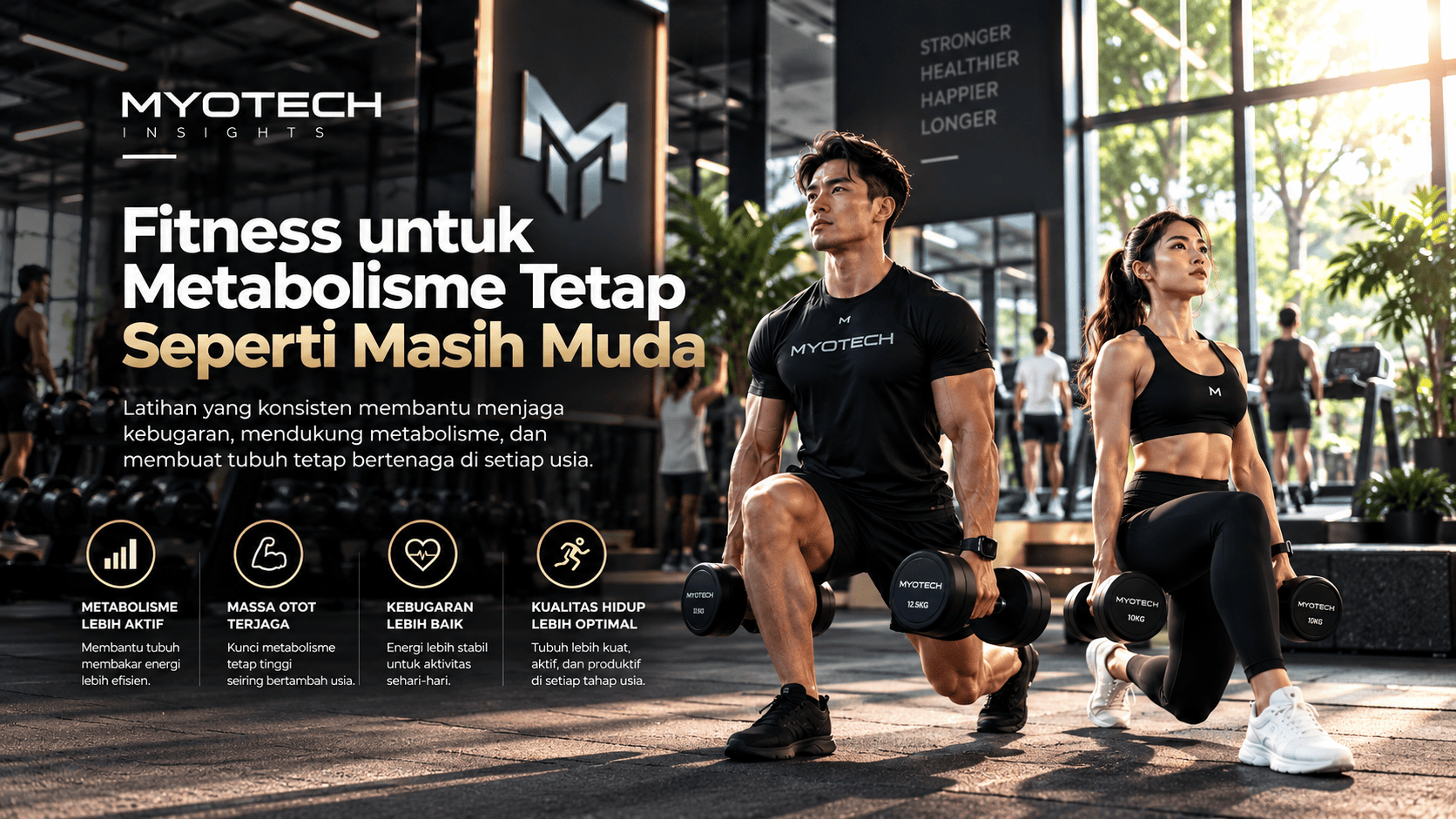
    Fitness untuk menjaga metabolisme bukan sekadar tentang membakar kalori atau mendapatkan bentuk tubuh ideal. Lebih dari itu, latihan fisik merupakan investasi jangka panjang untuk mempertahankan fungsi tubuh, kesehatan metabolik, dan kualitas hidup.

    Memahami Metabolisme: Bagaimana Tubuh Menghasilkan dan Menggunakan Energi

    Metabolisme adalah keseluruhan proses kimia yang memungkinkan tubuh mempertahankan kehidupan.

    Proses ini mencakup penggunaan energi untuk bernapas, menjaga suhu tubuh, memperbaiki jaringan, menggerakkan otot, hingga menjalankan fungsi organ.

    Apa Itu Basal Metabolic Rate (BMR)?

    Basal Metabolic Rate atau BMR merupakan jumlah energi yang diperlukan tubuh dalam kondisi istirahat untuk mempertahankan fungsi dasar kehidupan.

    BMR dipengaruhi oleh beberapa faktor, termasuk:

    • Ukuran dan komposisi tubuh.
    • Massa bebas lemak, termasuk otot dan organ.
    • Usia dan jenis kelamin.
    • Faktor genetik dan hormonal.
    • Kondisi kesehatan tertentu.

    Otot memang membutuhkan energi untuk dipertahankan, tetapi kontribusi massa otot terhadap metabolisme istirahat sering kali dibesar-besarkan.

    Manfaat utama membangun otot tidak hanya berasal dari tambahan kalori yang dibakar saat istirahat, melainkan juga dari peningkatan kekuatan, kemampuan bergerak, dan pengaturan glukosa tubuh.

    Apakah Metabolisme Pasti Melambat Setelah Usia 30 Tahun?

    Tidak selalu.

    Sebuah penelitian besar yang dipublikasikan dalam jurnal Science pada 2021 menemukan bahwa pengeluaran energi harian yang telah disesuaikan dengan ukuran dan komposisi tubuh relatif stabil pada masa dewasa, sekitar usia 20 hingga 60 tahun.

    Setelah usia tersebut, rata-rata pengeluaran energi mulai mengalami penurunan secara bertahap.

    Artinya, perubahan berat badan dan kebugaran pada usia dewasa tidak dapat dijelaskan hanya dengan anggapan bahwa metabolisme otomatis melambat setiap tahun.

    Berkurangnya aktivitas fisik, perubahan massa otot, asupan energi, dan kebiasaan hidup juga perlu diperhatikan.

    Mengapa Fitness Penting untuk Menjaga Metabolisme?

    Aktivitas fisik yang dilakukan secara konsisten membantu tubuh mempertahankan berbagai fungsi yang berhubungan dengan kesehatan metabolik.

    1. Mempertahankan Massa Otot Seiring Bertambahnya Usia

    Massa dan kekuatan otot dapat berkurang seiring bertambahnya usia, terutama apabila seseorang jarang melakukan aktivitas fisik.

    Penurunan massa dan fungsi otot yang bermakna dapat meningkatkan risiko keterbatasan gerak dan menurunkan kemampuan melakukan aktivitas sehari-hari.

    Latihan kekuatan atau resistance training merupakan salah satu strategi utama untuk membantu mempertahankan dan meningkatkan kekuatan otot.

    Contoh latihan meliputi:

    • Squat dan leg press untuk otot tubuh bagian bawah.
    • Chest press dan push-up untuk otot dada dan lengan.
    • Lat pulldown dan seated row untuk otot punggung.
    • Shoulder press untuk otot bahu.
    • Deadlift dan variasi hip hinge untuk kekuatan tubuh secara menyeluruh.

    Latihan perlu disesuaikan dengan kemampuan, teknik, pengalaman, dan kondisi kesehatan masing-masing individu.

    2. Membantu Meningkatkan Sensitivitas Insulin

    Insulin membantu mengatur kadar glukosa dalam darah.

    Ketika tubuh memiliki sensitivitas insulin yang baik, sel-sel tubuh dapat merespons insulin secara lebih efektif.

    Aktivitas fisik, terutama kombinasi latihan aerobik dan latihan kekuatan, dapat membantu meningkatkan penggunaan glukosa oleh otot dan mendukung pengendalian gula darah.

    Manfaat ini penting bagi kesehatan metabolik, termasuk dalam upaya mengurangi risiko gangguan metabolisme.

    Namun, olahraga bukan pengganti pemeriksaan maupun pengobatan yang diperlukan bagi seseorang dengan kondisi medis tertentu.

    3. Mendukung Kesehatan Jantung dan Paru-Paru

    Kebugaran kardiorespirasi menggambarkan kemampuan sistem jantung, paru-paru, dan pembuluh darah dalam mendukung aktivitas fisik.

    Latihan aerobik seperti berjalan cepat, bersepeda, berenang, jogging, atau menggunakan treadmill dapat membantu meningkatkan kapasitas tersebut.

    Semakin baik kebugaran kardiorespirasi, semakin besar kemampuan seseorang untuk melakukan berbagai aktivitas dengan efisien.

    Hal ini membantu menjaga kemandirian dan kualitas hidup seiring bertambahnya usia.

    4. Membantu Pengelolaan Berat Badan dan Komposisi Tubuh

    Berat badan dipengaruhi oleh keseimbangan energi dalam jangka panjang, pola makan, aktivitas fisik, tidur, serta faktor biologis lainnya.

    Fitness membantu meningkatkan pengeluaran energi melalui aktivitas dan mempertahankan massa otot selama proses pengelolaan berat badan.

    Namun, latihan fisik saja tidak selalu cukup untuk menghasilkan penurunan berat badan yang signifikan.

    Kombinasi latihan, pola makan yang sesuai, tidur cukup, dan kebiasaan berkelanjutan lebih penting dibandingkan pendekatan ekstrem.

    Latihan Apa yang Paling Efektif untuk Menjaga Kebugaran dan Metabolisme?

    Tidak ada satu jenis latihan yang mampu memenuhi seluruh kebutuhan tubuh.

    Pendekatan terbaik adalah menggabungkan beberapa komponen kebugaran.

    Strength Training: Fondasi Kekuatan dan Fungsi Otot

    Latihan kekuatan membantu mempertahankan kemampuan otot menghasilkan tenaga, mendukung kesehatan tulang, dan meningkatkan kemampuan fungsional.

    Bagi orang dewasa, latihan penguatan otot dianjurkan setidaknya dua hari setiap minggu, dengan melibatkan kelompok otot utama.

    Pemula dapat memulai dari gerakan sederhana menggunakan berat badan sendiri, resistance band, atau mesin fitness.

    Peningkatan beban dilakukan secara bertahap sesuai kemampuan.

    Cardiovascular Training: Menjaga Daya Tahan Tubuh

    Organisasi Kesehatan Dunia (WHO) merekomendasikan orang dewasa melakukan aktivitas aerobik intensitas sedang selama 150–300 menit per minggu, atau aktivitas intensitas berat selama 75–150 menit per minggu, maupun kombinasi yang setara.

    Aktivitas aerobik dapat dilakukan melalui:

    • Brisk walking atau jalan cepat.
    • Cycling.
    • Swimming.
    • Jogging.
    • Treadmill atau elliptical.
    • Kelas aerobik dan aktivitas kelompok lainnya.

    Bagi pemula, durasi latihan dapat ditingkatkan secara bertahap.

    Mobility dan Balance Training: Mempertahankan Kualitas Gerak

    Fleksibilitas, mobilitas sendi, dan keseimbangan menjadi semakin penting seiring bertambahnya usia.

    Latihan seperti stretching, yoga, gerakan mobilitas, dan latihan keseimbangan membantu mendukung kemampuan bergerak secara aman dan nyaman.

    Pada orang dewasa lanjut usia, latihan multikomponen yang menekankan keseimbangan dan kekuatan juga penting untuk membantu mengurangi risiko jatuh.

    Contoh Program Fitness untuk Mendukung Kesehatan Metabolik

    Berikut contoh jadwal sederhana bagi orang dewasa sehat yang ingin membangun kebiasaan latihan.

    HariProgram
    SeninStrength training seluruh tubuh, 45–60 menit
    SelasaJalan cepat atau cycling, 30–45 menit
    RabuMobility dan aktivitas ringan
    KamisStrength training seluruh tubuh, 45–60 menit
    JumatJalan cepat atau cardio intensitas sedang, 30–45 menit
    SabtuAktivitas rekreasi aktif, misalnya berenang atau hiking
    MingguIstirahat dan pemulihan

    Program tersebut merupakan contoh awal, bukan resep universal. Total aktivitas aerobik mingguan dapat ditambah secara bertahap agar mendekati rekomendasi kesehatan masyarakat.

    Kualitas gerakan, pemulihan, dan konsistensi lebih penting daripada memaksakan intensitas tinggi setiap hari.

    Nutrisi dan Pemulihan: Dua Faktor yang Tidak Boleh Diabaikan

    Fitness untuk menjaga metabolisme akan memberikan manfaat yang lebih optimal apabila didukung kebiasaan hidup yang baik.

    Konsumsi Protein yang Memadai

    Protein diperlukan untuk pemeliharaan dan perbaikan jaringan tubuh, termasuk otot.

    Kebutuhan protein dipengaruhi oleh usia, ukuran tubuh, aktivitas fisik, serta kondisi kesehatan.

    Sumber protein dapat diperoleh dari telur, ikan, daging, susu, kedelai, tempe, tahu, dan berbagai makanan lainnya.

    Tidur dan Pemulihan yang Berkualitas

    Tidur berperan dalam pemulihan fisik, fungsi kognitif, pengaturan nafsu makan, dan berbagai proses fisiologis.

    Sebagian besar orang dewasa dianjurkan tidur setidaknya tujuh jam per malam, dengan kebutuhan individual yang dapat bervariasi.

    Latihan yang baik perlu diimbangi waktu pemulihan yang cukup.

    Pertahankan Aktivitas di Luar Gym

    Satu jam latihan di gym tidak sepenuhnya menggantikan kebutuhan untuk aktif sepanjang hari.

    Berjalan kaki, menggunakan tangga, melakukan pekerjaan rumah, dan mengurangi waktu duduk berkepanjangan merupakan kebiasaan sederhana yang mendukung kesehatan.

    Bisakah Tubuh Tetap Bugar Seperti Saat Masih Muda?

    Pertanyaan yang lebih tepat bukanlah apakah tubuh dapat menghentikan penuaan, melainkan bagaimana seseorang dapat mempertahankan kemampuan fisik dan kualitas hidup selama mungkin.

    Seseorang berusia 50 tahun yang aktif berlatih dapat memiliki kemampuan fisik lebih baik dalam aspek tertentu dibandingkan seseorang yang lebih muda tetapi tidak aktif.

    Namun, hal tersebut tidak berarti usia biologis atau metabolisme tubuh benar-benar kembali menjadi lebih muda.

    Fitness membantu memperlambat atau mengurangi sebagian penurunan fungsi fisik yang berkaitan dengan usia, mempertahankan kapasitas aktivitas, dan mendukung kesehatan metabolik.

    Tujuannya bukan melawan usia dengan janji yang tidak realistis, melainkan menjalani setiap tahap kehidupan dengan tubuh yang lebih kuat dan fungsional.

    Kesimpulan: Menjaga Metabolisme adalah Investasi Jangka Panjang

    Menjaga kebugaran dan kesehatan metabolisme bukan tentang mencari latihan yang mampu membuat tubuh kembali berusia 20 tahun.

    Yang lebih penting adalah membangun kemampuan tubuh agar tetap kuat, aktif, dan mampu menjalankan aktivitas sehari-hari dengan baik.

    Melalui kombinasi latihan kekuatan, aktivitas aerobik, mobilitas, nutrisi yang memadai, serta pemulihan berkualitas, seseorang dapat mempertahankan berbagai aspek kesehatan fisik seiring bertambahnya usia.

    Fitness untuk menjaga metabolisme merupakan bagian dari strategi hidup sehat yang berkelanjutan, bukan solusi instan.

    Mulailah dari kemampuan hari ini. Bangun konsistensi, tingkatkan secara bertahap, dan jadikan aktivitas fisik sebagai bagian dari gaya hidup.

    MYOTECH — Powering The Future of Fitness.

    Referensi Ilmiah

    1. Pontzer H, et al. (2021). Daily energy expenditure through the human life course. Science. https://doi.org/10.1126/science.abe5017
    2. World Health Organization. WHO Guidelines on Physical Activity and Sedentary Behaviour (2020). https://www.who.int/publications/i/item/9789240015128
    3. American College of Sports Medicine. Progression Models in Resistance Training for Healthy Adults. Medicine & Science in Sports & Exercise (2009). https://doi.org/10.1249/MSS.0b013e3181915670
    4. Centers for Disease Control and Prevention. About Sleep. https://www.cdc.gov/sleep/about/index.html

    Disclaimer Kesehatan

    Artikel ini disusun untuk tujuan edukasi dan tidak menggantikan konsultasi, diagnosis, maupun penanganan oleh tenaga kesehatan profesional. Individu dengan penyakit kronis, gangguan jantung, cedera, atau keterbatasan fisik tertentu sebaiknya berkonsultasi dengan tenaga kesehatan sebelum memulai atau meningkatkan intensitas latihan.
  • Strong Women, Stronger Future: Why Fitness Matters at Every Stage of a Woman’s Life

    Strong Women, Stronger Future: Why Fitness Matters at Every Stage of a Woman’s Life

    For many years, fitness for women has often been associated with one objective: losing weight.

    Exercise programs are marketed around becoming smaller, burning calories, or achieving a particular body shape.

    But women’s fitness deserves a much broader perspective.

    Being physically fit means having the strength to perform everyday activities, cardiovascular capacity to remain active, strong muscles and bones, mobility to move confidently, and physical resilience that can support different stages of life.

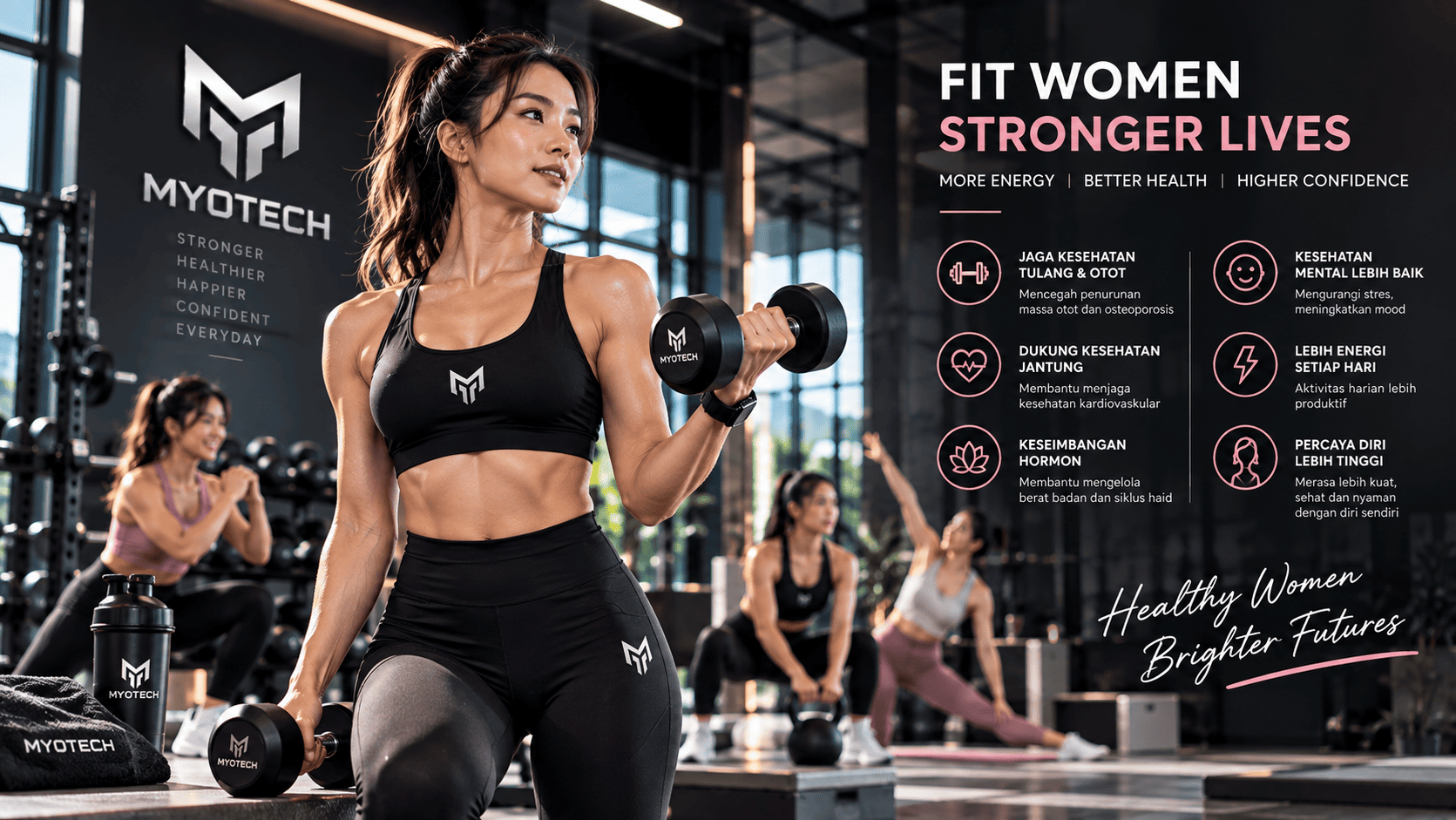
    From young adulthood to motherhood, professional life, menopause, and healthy aging, maintaining fitness can become one of the most valuable long-term investments a woman can make.

    Fitness is not simply about changing how a woman looks. It is about strengthening what her body can do.

    Women’s Fitness Is About Capability

    A woman’s body performs countless physical tasks every day.

    Walking.

    Climbing stairs.

    Working.

    Carrying groceries.

    Travelling.

    Taking care of children.

    Participating in sports.

    And eventually maintaining independence as she grows older.

    These activities require strength, endurance, balance, mobility, and coordination.

    That is why fitness should not be viewed only through the mirror or the scale.

    A better question is:

    What is my body capable of doing?

    Women Need Strength

    One of the most persistent misconceptions in fitness is that strength training is primarily for men.

    It isn’t.

    Women also benefit from maintaining and developing muscular strength.

    Resistance training can involve dumbbells, machines, resistance bands, bodyweight exercises, cables, free weights, and many other training methods.

    The objective does not need to be bodybuilding.

    Strength Has Practical Value

    Stronger muscles can make everyday activities easier.

    Squatting helps develop capacities involved in sitting and standing.

    Rows and pulling movements develop the muscles involved in pulling and carrying.

    Pressing movements develop upper-body strength.

    Hip-dominant exercises can strengthen muscles important for locomotion and everyday movement.

    Strength therefore has value far beyond the gym.

    We train muscles so they can serve us outside the gym.

    Muscle Becomes Increasingly Valuable with Age

    Muscle mass and strength tend to decline with aging, particularly when physical activity is insufficient.

    This makes maintaining muscle an important consideration for long-term physical function.

    Women do not need to wait until older age to begin thinking about this.

    Building an active lifestyle earlier provides an opportunity to enter later decades with a stronger physical foundation.

    This changes the meaning of strength training.

    It is no longer simply about today’s appearance.

    It becomes part of preparing for tomorrow’s independence.

    Fitness Supports Bone Health

    Bone health is particularly important for women across the lifespan.

    Bone mass changes with age, and the decline in estrogen associated with menopause can accelerate bone loss.

    Weight-bearing physical activity and appropriately programmed resistance training can form part of a lifestyle that supports bone health.

    Exercise cannot guarantee that someone will never develop osteoporosis, and individual risk is influenced by age, genetics, nutrition, hormonal status, medical conditions, medications, and other factors.

    But physical activity is one modifiable component worth developing throughout life.

    Cardiovascular Fitness Matters Just as Much

    Strength is only one part of women’s fitness.

    The cardiovascular system also needs regular activity.

    Walking, running, cycling, swimming, dancing, group exercise, and other aerobic activities can help develop cardiovascular fitness.

    Women therefore do not need to choose between:

    Cardio OR strength training.

    A balanced program can contain both.

    Resistance training develops strength and muscular capacity.

    Aerobic training develops endurance and cardiovascular fitness.

    Mobility work supports movement.

    Recovery allows adaptation.

    Together, these components create a more complete approach to fitness.

    Exercise and Mental Well-Being

    Women often balance multiple responsibilities at once.

    Career.

    Education.

    Family.

    Relationships.

    Parenting.

    Social expectations.

    Personal responsibilities.

    The accumulation of these demands can contribute to stress and mental fatigue.

    Exercise cannot remove every source of stress, nor should it be presented as a replacement for professional mental healthcare.

    But regular physical activity can support psychological well-being and provide dedicated time to move, focus on the body, interact socially, or simply step away temporarily from daily demands.

    For some women, the gym becomes more than a place to exercise.

    It becomes personal time.

    Fitness During Different Stages of Life

    Women’s bodies and circumstances can change significantly across life.

    That means training should also be adaptable.

    Young Adulthood

    This can be an excellent period to establish fundamental movement skills, develop strength, improve cardiovascular fitness, and build sustainable exercise habits.

    The goal does not have to be perfection.

    The important thing is learning how to train safely and consistently.

    Pregnancy and Postpartum

    Physical activity can remain valuable during pregnancy and after childbirth for many women, but individual circumstances differ.

    Training may need to be modified according to pregnancy stage, symptoms, medical history, delivery, recovery, and professional medical guidance.

    This is an area where individualized recommendations are particularly important.

    Perimenopause and Menopause

    As women approach and transition through menopause, changes in hormones can influence areas such as bone health, body composition, sleep, and other aspects of health.

    Maintaining resistance training, cardiovascular activity, appropriate nutrition, and recovery can become especially valuable during this period.

    Older Adulthood

    Later in life, the objective may increasingly focus on maintaining:

    strength, balance, mobility, endurance, and independence.

    The numbers lifted in the gym become less important than what that strength allows someone to continue doing in everyday life.

    Women Should Not Be Afraid of Lifting Weights

    Another common concern is:

    “If I lift weights, will I become too muscular?”

    Significant muscular development requires appropriate training stimulus, nutrition, time, genetics, and consistency.

    Resistance training does not automatically create an extreme bodybuilding physique.

    For most women training for general health and fitness, strength training can instead be used to develop physical capacity, support muscle maintenance, and improve performance.

    Weights are simply tools.

    How they are programmed determines how they are used.

    Fitness Should Not Become Punishment

    Exercise should not exist solely to compensate for food.

    A woman should not feel that she has to run because she ate dessert or train because she dislikes her body.

    That relationship can turn physical activity into punishment.

    A healthier perspective is:

    I exercise because my body deserves to be cared for.

    Training becomes an act of development rather than punishment.

    The objective shifts from:

    “I need to fix my body.”

    to:

    “I want to strengthen and take care of my body.”

    That distinction matters.

    Confidence Can Come from Capability

    Physical confidence does not have to come only from appearance.

    There is another form of confidence:

    lifting something that once felt heavy.

    Running farther than before.

    Learning a new exercise.

    Completing a challenging class.

    Feeling stronger.

    Moving without fear.

    Seeing measurable improvement.

    This is confidence built through capability.

    And it can be one of the most rewarding outcomes of fitness.

    Fitness Does Not Need to Look the Same for Every Woman

    There is no single perfect form of exercise for women.

    One woman may love strength training.

    Another may prefer Pilates.

    Another enjoys running.

    Someone else chooses swimming, yoga, dance, cycling, functional training, or group classes.

    The most appropriate program depends on goals, health, age, experience, preferences, available time, and physical condition.

    Fitness should adapt to the woman.

    The woman should not have to adapt her life to an unrealistic fitness ideal.

    Strong Today, Independent Tomorrow

    Perhaps one of the most important reasons for women to maintain fitness is something that may not become fully visible for decades.

    Independence.

    Having enough strength to get up from the floor.

    Enough balance to reduce the likelihood of falls.

    Enough endurance to travel.

    Enough muscular capacity to perform everyday activities.

    Enough confidence to continue moving.

    We cannot control every aspect of aging or health.

    But maintaining physical activity is one factor we can influence.

    The workouts performed today are therefore not only about today’s body.

    They can also be part of preparing for the woman we will become in the future.

    Conclusion: Strong Women Build Stronger Futures

    Women’s fitness should never be reduced to weight loss or appearance.

    It is about building a body capable of supporting life.

    Strong muscles.

    Healthy movement.

    Cardiovascular fitness.

    Bone health.

    Mobility.

    Mental well-being.

    Confidence.

    And long-term independence.

    Every woman’s journey will be different, and exercise should respect individual health, circumstances, and stages of life.

    But the principle remains simple:

    Taking care of physical fitness today is an investment in what your body may be capable of tomorrow.

    Train not because you need to become smaller.

    Train because you deserve to become stronger, healthier, more capable, and better prepared for the future.

  • Fitness for Kids: Building Healthy Habits Today for a Stronger Future

    Fitness for Kids: Building Healthy Habits Today for a Stronger Future

    When we talk about preparing children for the future, we often think about education, knowledge, skills, and financial security.

    But there is another foundation that is just as important: their health and physical fitness.

    Children who learn to enjoy movement from an early age are not simply exercising for today. They are learning habits, movement skills, confidence, and an understanding of their bodies that can support an active lifestyle as they grow.

    This is why fitness for kids should not be viewed as a trend or simply a smaller version of adult gym training.

    It can be part of preventive health education—helping children understand from an early age that taking care of their bodies is an important part of taking care of their future.

    Prevention Can Begin with Movement

    Many conversations about health begin only after problems appear.

    A better long-term approach is to also think about prevention.

    For children, prevention does not mean worrying about diseases at a young age. It means creating an environment that makes healthy behaviors familiar and enjoyable.

    Regular physical activity is one part of that environment.

    The World Health Organization recommends that children and adolescents aged 5–17 accumulate an average of at least 60 minutes per day of moderate-to-vigorous physical activity across the week, with vigorous activities and activities that strengthen muscle and bone incorporated at least three days per week.

    But these recommendations should not turn childhood into a rigid training schedule.

    Children should still play, explore, run, jump, climb, learn and have fun.

    Kids Fitness Is Not Adult Fitness

    Children are not miniature adults.

    Their bodies, movement abilities, attention spans, motivations, and developmental needs are different.

    A good children’s fitness program therefore should not focus on bodybuilding, maximal lifting, appearance, or pushing children to exhaustion.

    The Foundation Is Movement

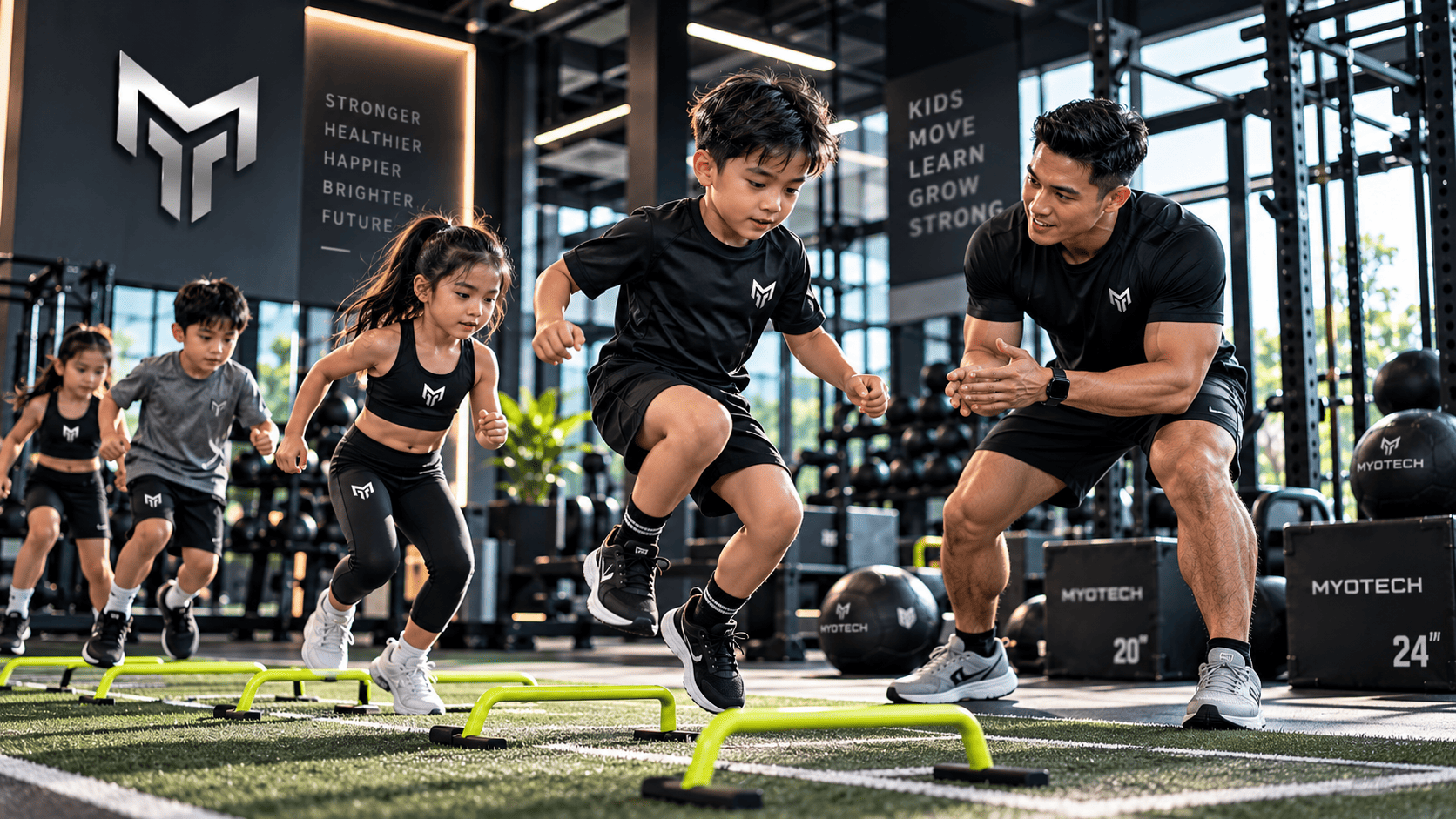
    Age-appropriate programs can introduce fundamental movement skills such as:

    • running and changing direction,
    • jumping and landing,
    • balancing,
    • throwing and catching,
    • crawling and climbing,
    • pushing and pulling,
    • squatting and hinging,
    • coordination and body control.

    These skills can later become a foundation for sports, recreational activities, and everyday movement.

    The objective is not to create young athletes as quickly as possible.

    The objective is to help children become confident movers.

    Strength Training Can Be Age-Appropriate

    There is sometimes concern that children should never perform resistance or strength exercises.

    The reality is more nuanced.

    Appropriately designed and supervised resistance training can be part of youth physical activity. The emphasis should be on appropriate technique, progression, supervision, and exercises suited to the child’s developmental level.

    Resistance can come from many sources—not just heavy barbells.

    Bodyweight exercises, resistance bands, medicine balls, light external resistance, climbing, carrying, jumping, and playful movement challenges can all be incorporated depending on the child’s age and ability.

    For children, quality of movement comes before the amount of weight.

    Fitness Helps Children Discover What Their Bodies Can Do

    Modern fitness culture can sometimes focus too heavily on appearance.

    Children should receive a different message.

    Exercise should teach them to appreciate what their bodies can do, rather than encouraging them to worry about how their bodies look.

    Can I run?

    Can I jump?

    Can I balance?

    Can I learn a new movement?

    Can I become stronger?

    Can I play longer?

    Can I work together with my friends?

    This creates a healthier relationship with physical activity.

    Fitness becomes associated with ability, enjoyment, learning and confidence rather than punishment or appearance.

    Building Healthy Habits Before Adulthood

    Habits are easier to understand when they become part of everyday life.

    A child who grows up seeing movement as normal does not have to suddenly discover physical activity as an adult.

    They already understand that moving their body is part of life.

    The same principle can apply to other behaviors surrounding health:

    being active, eating a varied diet, drinking enough water, sleeping adequately, recovering, maintaining hygiene, and understanding when the body needs rest.

    Fitness therefore becomes more than an exercise session.

    It becomes health education through experience.

    Parents and Coaches Shape the Experience

    Adults have an important role in determining how children perceive exercise.

    If physical activity is constantly associated with punishment, comparison, criticism, or pressure, children may develop negative feelings toward it.

    But when movement is associated with discovery, encouragement, achievement, friendship, and fun, the experience can be very different.

    Parents and coaches should focus on progress rather than perfection.

    Not every child needs to be the fastest.

    Not every child needs to be the strongest.

    And not every child needs to become an athlete.

    Every child, however, can be given opportunities to move, learn and develop.

    Fitness Can Also Build Social Skills

    Children’s fitness does not have to happen alone.

    Group activities can provide opportunities to communicate, cooperate, follow instructions, solve movement challenges, take turns, and support teammates.

    A well-designed class can therefore combine physical activity with social interaction.

    The goal is not constant competition.

    Sometimes children should compete.

    Sometimes they should collaborate.

    Sometimes they should simply play.

    A positive environment allows all three.

    Technology Has Changed Childhood

    Today’s children are growing up surrounded by smartphones, tablets, gaming, streaming platforms, and digital entertainment.

    Technology itself is not the enemy.

    It can support education, creativity, communication, and even physical activity.

    The challenge is balance.

    When sedentary screen-based activities increasingly replace opportunities for active play and movement, children may simply spend less time moving.

    Rather than framing the solution as technology versus exercise, families can create routines where both have appropriate places.

    Digital literacy prepares children for the modern world.

    Physical literacy prepares their bodies to live in it.

    A Healthy Future Is Built Before We Need It

    Parents invest in schools because education prepares children intellectually for the future.

    We teach financial responsibility because it prepares them economically.

    We teach values because they influence character.

    Physical health deserves similar attention.

    Teaching children to move, exercise, recover, and understand their bodies is another form of preparation.

    We cannot guarantee what a child’s health will look like decades from now. Genetics, environment, socioeconomic circumstances, medical conditions, and many other factors will influence their health throughout life.

    But we can give them something valuable today:

    knowledge, opportunity, movement skills, and healthier habits.

    The Goal Is Not Just a Fit Child. It Is a Health-Conscious Adult.

    The greatest success of a children’s fitness program may not be visible immediately.

    It may appear years later.

    When that child becomes a teenager who enjoys being active.

    An adult who understands the importance of exercise.

    A parent who introduces movement to their own children.

    Or an older adult who still considers physical activity a normal part of life.

    That is why fitness for kids can be viewed as a long-term preventive investment.

    We are not simply preparing children to perform better today.

    We are helping prepare them to take responsibility for their health tomorrow.

    Health & Fitness Disclaimer: This article is for educational purposes only. Children’s exercise programs should be age-appropriate and adapted to individual development, abilities, and health conditions. Children with medical conditions or specific health concerns should receive appropriate guidance from qualified healthcare professionals.

  • The Evolution of Fitness: From Traditional Training to Smarter, Personalized Experiences

    The Evolution of Fitness: From Traditional Training to Smarter, Personalized Experiences

    The fitness industry is entering a new era. Training is no longer defined only by gym equipment, workout routines, or physical spaces. Today, fitness is becoming more personalized, connected, and data-driven, allowing people to train with greater purpose while receiving experiences tailored to their individual goals.

    Fitness Is Becoming More Personal

    Every individual has different goals, physical conditions, lifestyles, and training experiences. Because of this, the traditional one-size-fits-all approach to fitness is gradually evolving toward more personalized training experiences.

    Personalized fitness can combine individual goals, training history, progress, lifestyle, and professional guidance to create programs that are more relevant to each person.

    Beyond the Traditional Gym Experience

    Gyms remain an important part of the fitness industry, but the fitness experience is expanding beyond physical facilities.

    People can now combine gym training with online coaching, digital training programs, group classes, recovery, wellness services, and educational resources. This creates a more flexible fitness journey that can continue both inside and outside the gym.

    The Growing Role of Fitness Professionals

    Technology does not eliminate the importance of coaches and fitness professionals. Instead, it can provide them with better tools to support their clients.

    Coaches can use digital platforms to manage training programs, communicate with clients, monitor progress, provide education, and maintain relationships beyond face-to-face training sessions.

    Human expertise remains essential, while technology can help professionals deliver that expertise more efficiently and consistently.

    Data Can Create Better Training Experiences

    Training data can provide useful information about progress, consistency, performance, and individual behavior.

    When used appropriately, this information can help coaches and individuals understand what is working, identify areas that may need adjustment, and make more informed decisions about training.

    The result is a fitness experience that can become increasingly responsive to the needs and progress of each individual.

    Connecting Fitness and Wellness

    The future of fitness is also becoming more closely connected with wellness.

    Exercise is one part of a broader lifestyle that can include nutrition, recovery, sleep, mobility, stress management, and education. Connecting these areas can create a more comprehensive approach to supporting long-term health and performance.

    This evolution is encouraging fitness businesses and professionals to think beyond workouts and develop experiences that support the broader wellness journey.

    Building a More Connected Fitness Ecosystem

    As the industry evolves, fitness businesses, professionals, technology platforms, education providers, and wellness services can become increasingly interconnected.

    Instead of operating as separate services, these elements can work together within a connected ecosystem that makes fitness more accessible, personalized, and efficient.

    MYOTECH is developing a fitness and wellness technology ecosystem designed to connect these different parts of the industry and support businesses, professionals, and communities as fitness continues to evolve.

    The Next Generation of Fitness

    The next generation of fitness will not simply be about having more technology. It will be about using technology to create better connections between people, professionals, businesses, and wellness services.

    The combination of human expertise, personalized experiences, data, and connected digital systems can help shape a smarter and more integrated future for fitness and wellness.

    Explore more insights from MYOTECH.