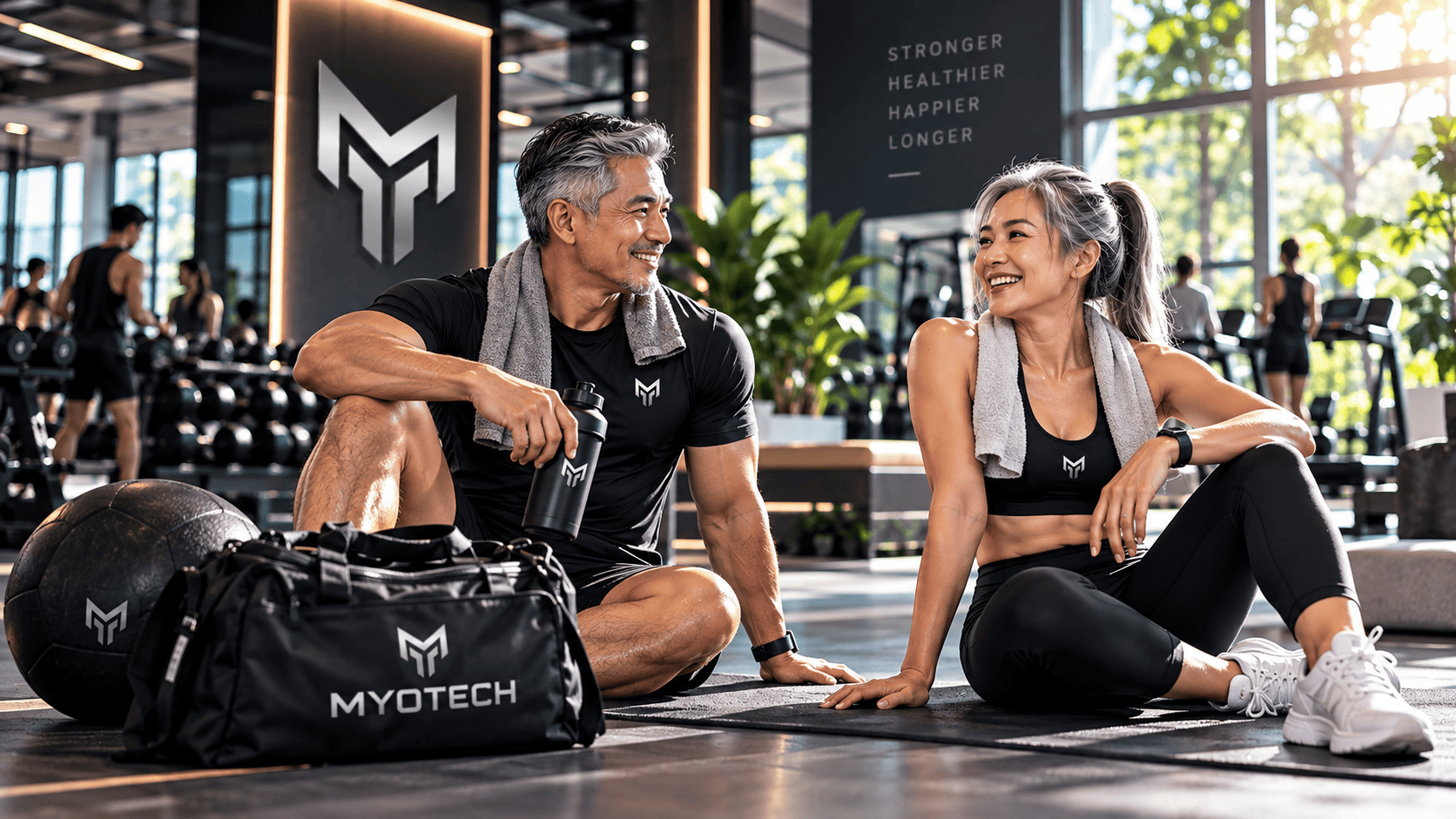
We often prepare financially for the future. We save money, build careers, invest, and plan for retirement.
But there is another investment that deserves the same attention: our health.
A longer life becomes far more meaningful when we can continue moving independently, enjoying activities we love, spending time with family, travelling, and participating in everyday life with confidence.
Investing in health does not begin when we grow old. It begins with the choices we make today.
Health Is an Investment, Not an Expense
Gym memberships, nutritious food, preventive health checks, quality sleep, and time dedicated to physical activity are sometimes viewed simply as expenses.
A better perspective is to see them as investments in our future physical capacity and quality of life.
Just as financial investments can accumulate over time, healthy habits can also produce benefits that extend across many years.
There is no guarantee that healthy habits will prevent every illness or age-related change. Genetics, environment, medical conditions, and many other factors influence health.
But maintaining an active lifestyle can help us build a stronger foundation for the future.
Muscle Is Part of Your Long-Term Health Capital
One of the most valuable physical assets we can maintain as we age is muscle.
Muscle is not only about appearance.
It helps us stand up, walk, climb stairs, carry groceries, maintain balance, participate in recreational activities, and perform countless everyday movements.
Strength and muscle mass can decline with age, particularly when physical activity is limited. Resistance training provides a stimulus that helps maintain muscular strength and physical function.
Strength Training Is Not Only for Young People
Resistance training can be adapted to different ages and ability levels.
The goal does not always need to be lifting extremely heavy weights or developing large muscles.
For long-term health, the objective may simply be to maintain enough strength to continue performing everyday activities independently and confidently.
The appropriate exercise selection, intensity, volume, and progression should always reflect the individual’s experience, physical condition, and health status.
Cardiovascular Fitness Matters Too
Strength is only one part of healthy aging.
Our heart, lungs, blood vessels, and overall cardiovascular system also need regular activity.
Walking, cycling, swimming, jogging, dancing, and other aerobic activities can contribute to cardiovascular fitness.
A balanced lifestyle therefore does not have to choose between strength training or cardio.
Both can play complementary roles.
Strength training helps maintain physical capacity, while aerobic activity supports cardiovascular fitness and endurance.
Mobility Gives Us Freedom
Imagine having enough money to travel in retirement but struggling to walk comfortably.
Or having plenty of free time but finding stairs, carrying luggage, or playing with grandchildren physically difficult.
This is why mobility has enormous practical value.
Maintaining strength, balance, coordination, flexibility, and general physical activity can help preserve our ability to participate in everyday life.
The ultimate goal of fitness is not simply looking fit.
It is having a body capable of supporting the life we want to live.
Nutrition Is Part of the Investment
Exercise cannot work in isolation.
The body also requires adequate nutrition to support health, training, recovery, and normal physiological functions.
A sustainable eating pattern should generally prioritize adequate protein, fruits and vegetables, appropriate energy intake, hydration, and a varied selection of nutrient-rich foods.
Individual nutritional requirements can differ significantly depending on age, activity level, health conditions, goals, and other factors.
Rather than searching for a perfect diet, building eating habits that can realistically be maintained over the long term is often more useful.
Recovery Is Productive
Modern fitness culture sometimes celebrates doing more.
More workouts. More intensity. More steps. More discipline.
But adaptation also requires recovery.
Sleep and adequate recovery give the body an opportunity to respond to training demands.
Training harder is therefore not automatically training better.
A sustainable fitness program balances training, nutrition, sleep, and recovery.
Mental and Social Well-Being Matter
A healthy future is not defined only by laboratory numbers or physical performance.
Quality of life also involves psychological and social well-being.
Exercise can provide opportunities for recreation, personal achievement, routine, and social interaction.
A gym, running club, group class, or recreational activity can become more than somewhere to exercise. It can also provide a community where people interact, learn, and pursue healthier lifestyles together.
You Don’t Need to Wait Until You’re Older
One of the biggest mistakes we can make is assuming that healthy aging is something to think about only after reaching old age.
The habits we establish earlier can influence the physical capacity we bring into later decades.
You do not need a perfect lifestyle.
Start with something realistic:
Move regularly.
Build strength.
Improve cardiovascular fitness.
Eat well most of the time.
Sleep adequately.
Recover.
Maintain meaningful social connections.
And pay attention to preventive healthcare appropriate to your circumstances.
Consistency matters more than chasing perfection.
The Real Return on Your Health Investment
Financial investments are usually measured in money.
Health investments have a different kind of return.
Being able to walk independently.
Carrying your own groceries.
Travelling.
Exercising.
Playing with your children or grandchildren.
Enjoying hobbies.
Meeting friends.
And continuing to participate actively in life.
Growing older is inevitable.
How each person experiences aging is influenced by many factors, some within our control and some outside it. But building healthier habits today can help create a stronger foundation for the years ahead.
Invest in your health today—not simply to live longer, but to give yourself a better opportunity to live well.
Health Disclaimer: This article is for educational purposes only and is not a substitute for professional medical advice, diagnosis, or treatment. Individual health and exercise needs may vary. Consult an appropriate healthcare professional when necessary.